Université de Lille
Espace 1894 – Institut Pasteur, Lille – October 3 and 4, 2026
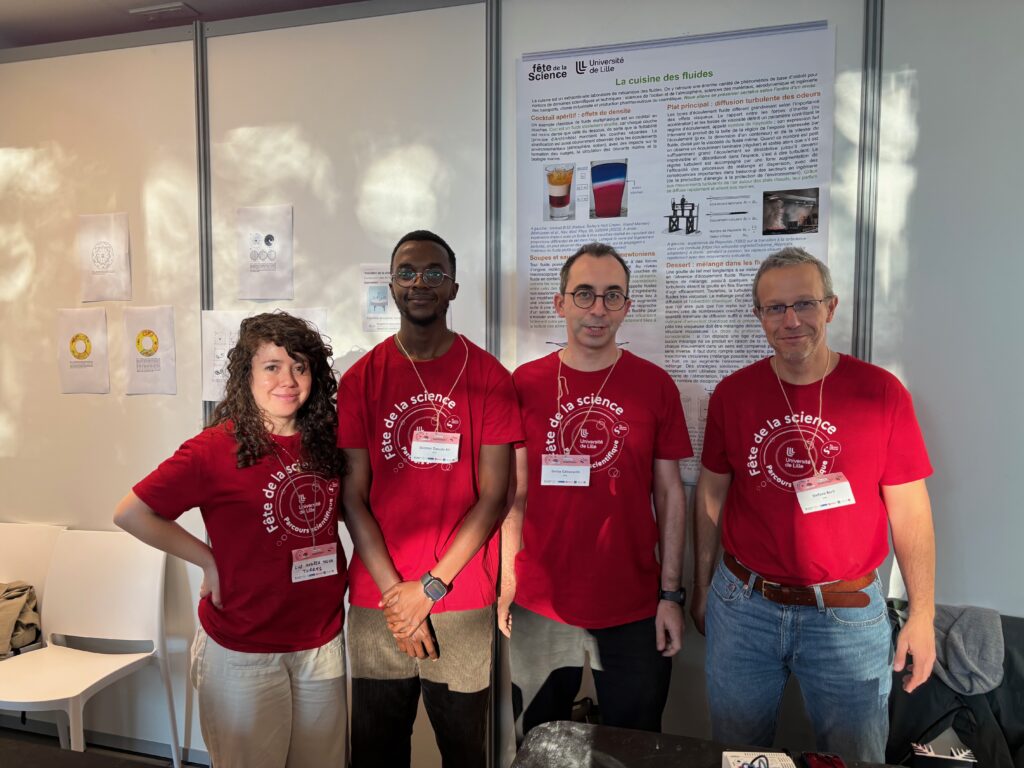
Stand La cuisine des fluides
Stefano Berti and Enrico Calzavarini
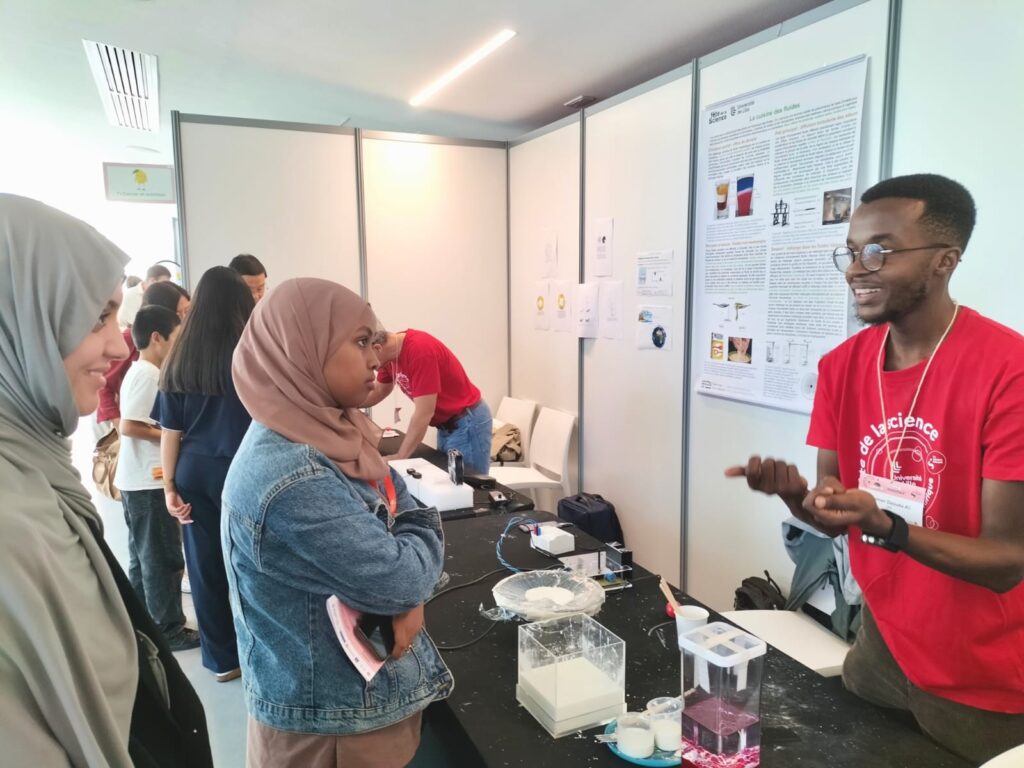
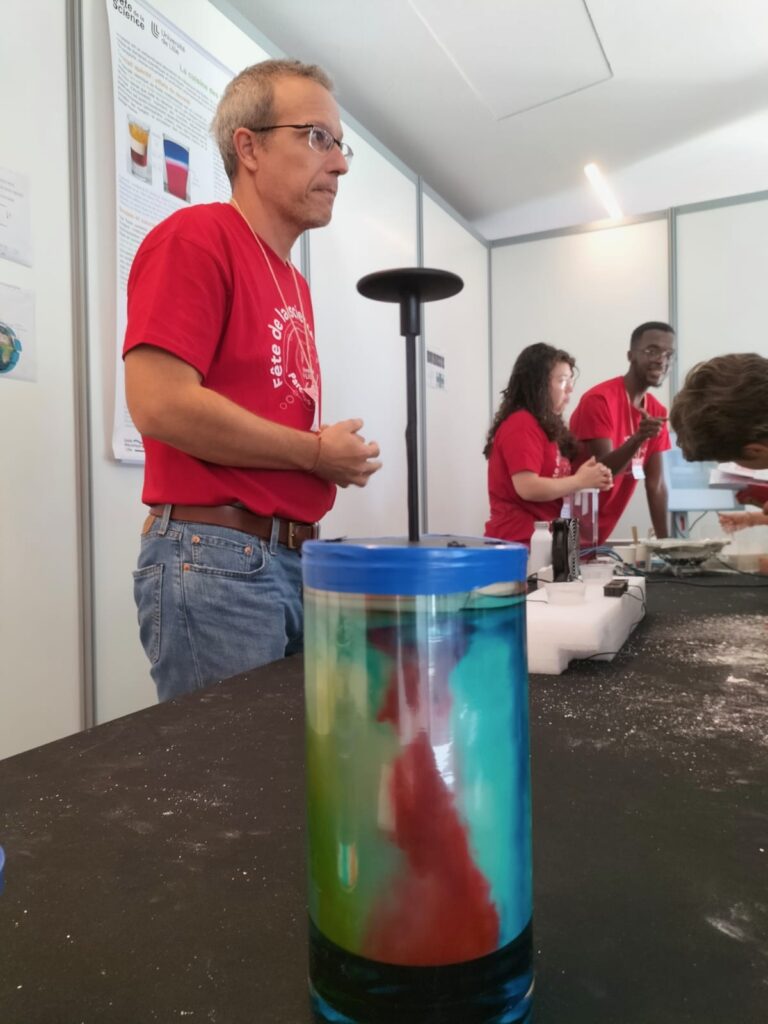
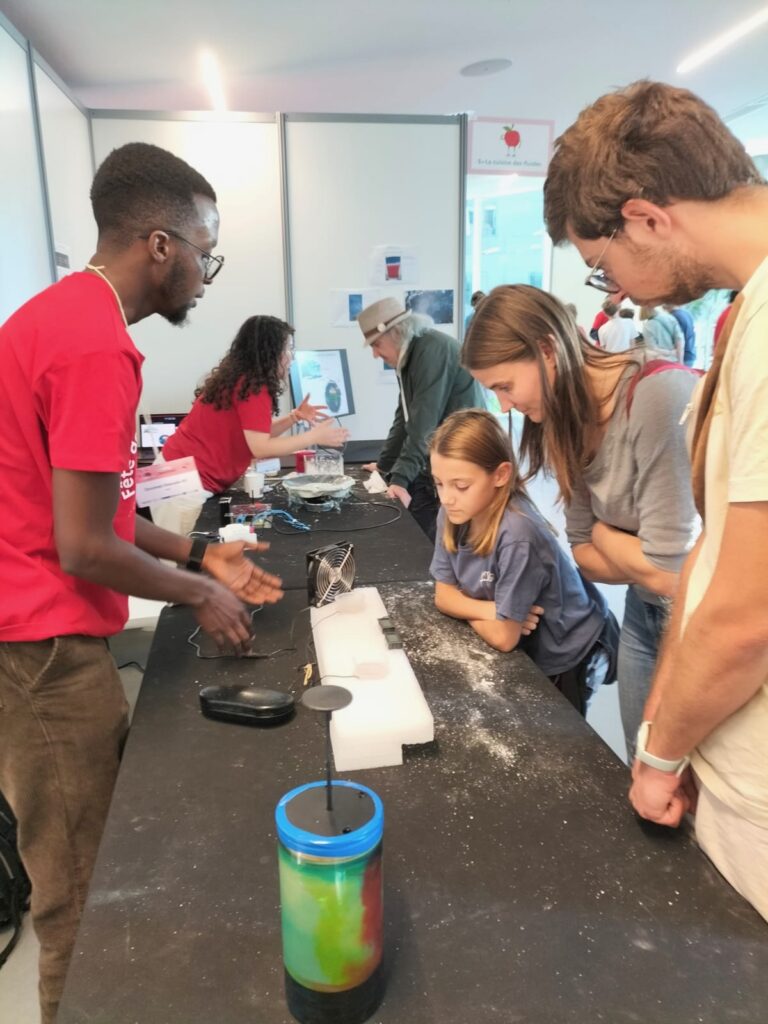
In 2026 the festival’s theme was about flavors and scientific knowledge. We talked about different phenomena occurring in the kitchen and culinary fluids. Following a sort of a menu, we discussed: density stratification effects and internal waves, which can be found in some cocktails; the shear-dependent viscosity of some pastes, soups and creams, the role of forced thermal convection for the cooling of a hot dish and the spreading of food fragrances; the difficulty to mix in very viscous fluids, as those often used in the preparation of desserts. Beyond the kitchen, phenomena of these types are relevant to a great variety of scientific and technological problems, ranging from the dynamics of the atmosphere and the ocean (which are stratified fluids) to chemical engineering and material science (e.g. to produce innovative materials whose viscosity varies with the applied solicitation), biology (e.g. the swimming of micro-organisms in viscous fluids). Two PhD students of our lab (Unité de Mécanique de Lille), Ousman Daouda Ali and Luz Andrea Silva Torres helped us to present this topic on our stand.
More details in our poster [pdf]
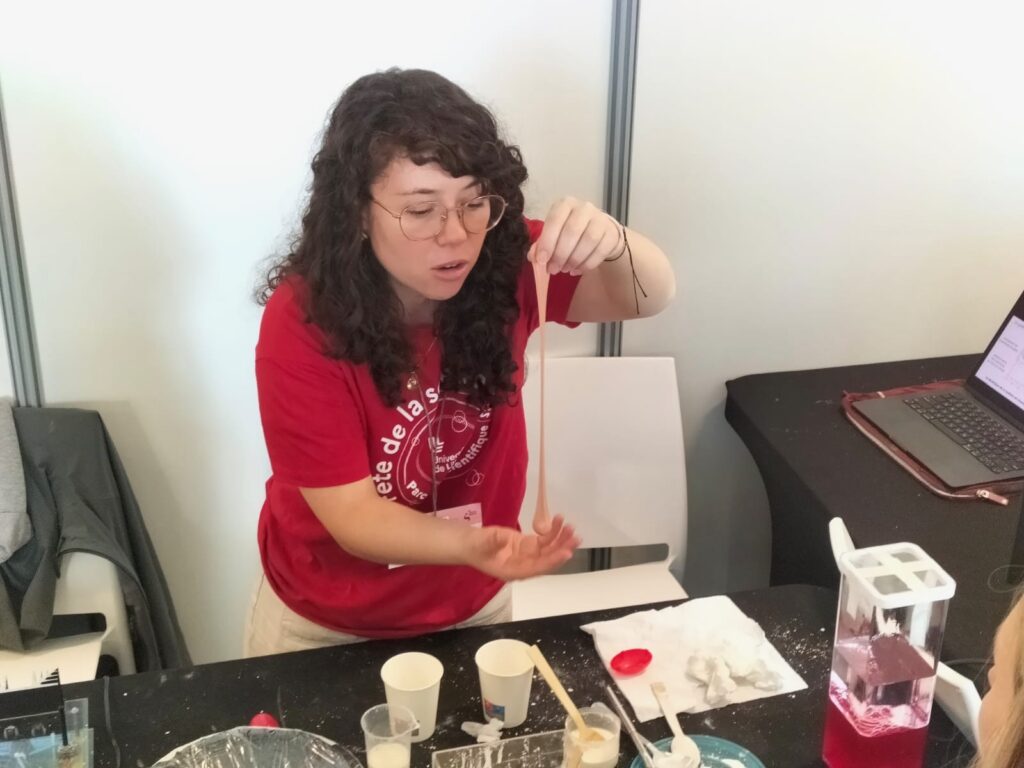
A solution of water and cornstarch is shear thickening: its viscosity increases with increasing applied shear rate. Under rapid enough external action it behaves as a solid, while when it is agitated more slowly it behaves like a fluid. When vibrated on a loudspeaker, depending on the vibration frequency, it can form some rather solid blobs that “dance” with up and down movements.